
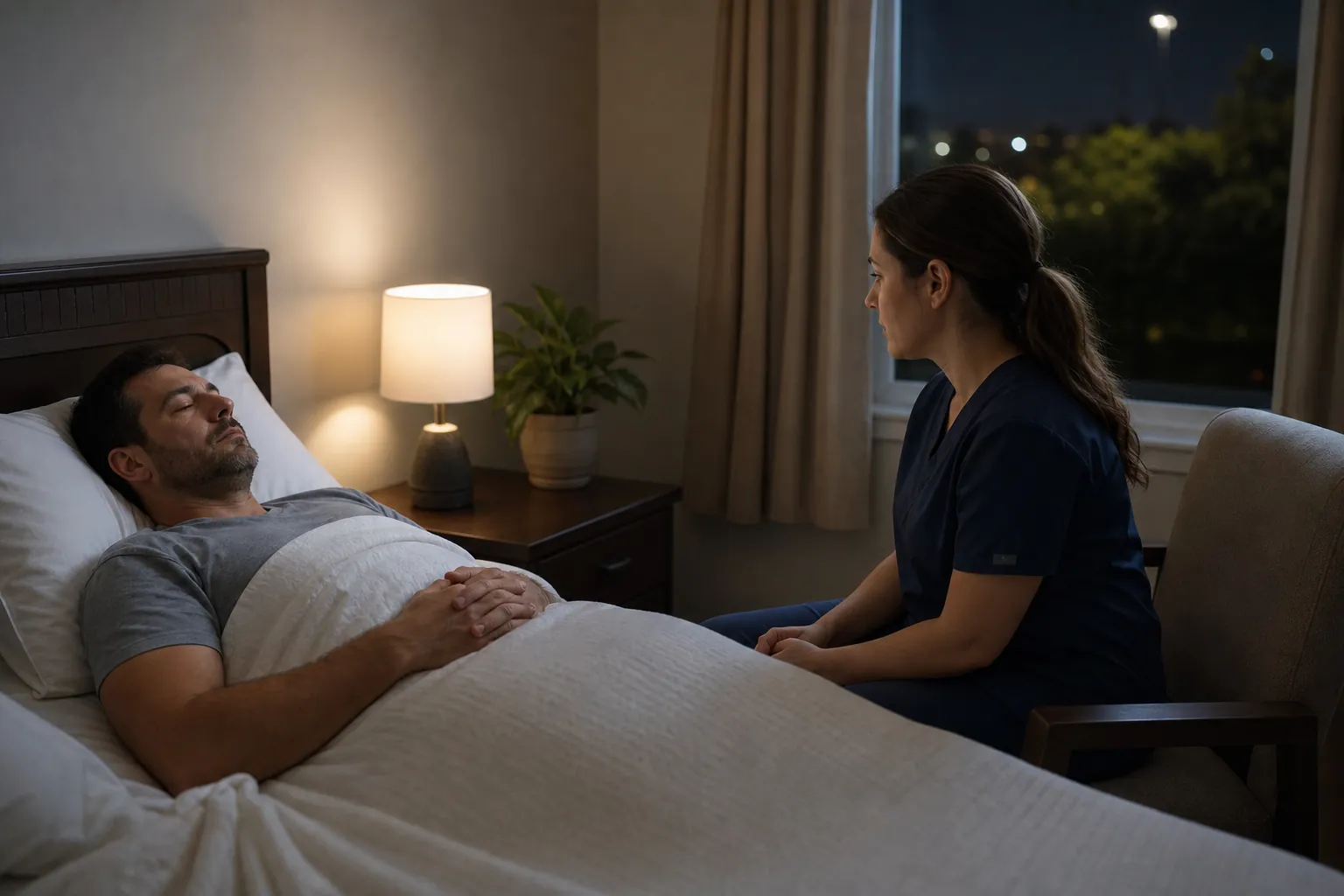
Withdrawal does not follow business hours. Someone who feels relatively comfortable in the afternoon may develop stronger symptoms after dinner or struggle to sleep through the night. For people considering detox in California, understanding what happens overnight is an important part of choosing an appropriate level of care.
Overnight monitoring is not simply a bed and someone nearby. Depending on the setting, it can involve scheduled assessments, access to licensed clinicians, medication support, and a clear response plan when symptoms change. The right arrangement depends on the substances involved, the person's health, and their withdrawal history.
If you are searching for detox monitoring overnight California options, this guide explains what to ask, which symptoms require urgent attention, and how to prepare. Living Longer Recovery can be contacted at (747) 232-9694 to discuss treatment questions and next steps. A clinical evaluation, rather than an online checklist, should determine the safest setting.
Why Overnight Withdrawal Monitoring Matters
Withdrawal occurs when the body adjusts to a reduction or absence of a substance it has become physically dependent on. Symptoms vary considerably. They may include anxiety, sweating, nausea, shaking, insomnia, pain, changes in blood pressure, or more serious complications.
The timing also varies. Symptoms depend on the substance, the amount and frequency of use, the time of the last dose, and individual factors such as liver function. Some symptoms emerge quickly, while others develop later or continue for several days. A quiet first evening does not establish that withdrawal will remain mild.
Nighttime creates practical challenges. People may be tired, less willing to report discomfort, or uncertain whether symptoms warrant waking staff. Poor sleep can make distress harder to manage. A well-organized program explains how to ask for help and does not require residents to judge the seriousness of every symptom themselves.
Monitoring helps staff notice changes and respond within their training and authority. It can also reduce isolation during a vulnerable period. However, observation alone is not equivalent to medical treatment. When comparing programs, ask what staff can assess, what they can treat, and when they must arrange a transfer.

Which Substances And Health Factors Change The Risk?
Not all withdrawal carries the same risks. Alcohol and benzodiazepine withdrawal can cause seizures or delirium and may be life-threatening. People who use these substances regularly should seek medical advice before abruptly stopping or substantially reducing use.
Opioid withdrawal can cause severe discomfort, vomiting, diarrhea, and dehydration. Although it is often not directly life-threatening in otherwise healthy adults, complications can occur. Pregnancy, significant medical conditions, and an inability to keep fluids down require particular attention. Evidence-based medications may be appropriate for withdrawal and ongoing opioid use disorder treatment.
Stimulant withdrawal may involve exhaustion, sleep changes, depression, agitation, or intense cravings. Psychiatric monitoring can be especially important when someone has suicidal thoughts, paranoia, or other serious mental health symptoms. Physical symptoms are only one part of the assessment.
Using multiple substances can complicate the picture. Alcohol, sedatives, opioids, and other drugs may have overlapping or different withdrawal timelines. Tell the evaluating clinician about all substances, including prescriptions, over-the-counter products, and any pills obtained outside a pharmacy.
- A history of withdrawal seizures or delirium should be disclosed before admission because it may change the recommended setting.
- Pregnancy, heart disease, breathing problems, diabetes, or significant liver disease can affect monitoring and treatment decisions.
- Recent overdose, severe intoxication, or uncertain drug contents may require urgent medical evaluation rather than routine admission.
- Previous difficulty completing detox can help clinicians plan more appropriate symptom support and follow-up care.
- Suicidal thoughts or an inability to stay safe require immediate assessment, even when physical withdrawal symptoms seem limited.

What Overnight Monitoring Should Actually Include
The phrase “24-hour support” can mean different things. It may refer to awake residential staff, an on-call clinician, nursing coverage, or a medically staffed unit. These arrangements are not interchangeable. Ask for a plain-language description of who is present at night and what help is available.
Monitoring commonly begins with an initial assessment. Staff may review substance use, medications, medical conditions, mental health concerns, and prior withdrawal complications. Depending on the program and clinical needs, assessments may include vital signs and structured withdrawal symptom measures.
During the night, reassessment should follow the person's condition and the program's clinical protocols. There is no single check-in schedule that is appropriate for everyone. Someone with increasing symptoms may need closer attention or a higher level of care.
Medication access is another important distinction. Some settings can administer prescribed medication on site; others have more limited capabilities. Ask who prescribes, who administers medication, and how a new concern is handled when the usual provider is unavailable.
- Ask whether overnight staff remain awake and how residents can reach them from their rooms.
- Ask whether licensed nurses are physically present overnight or available through another arrangement.
- Ask how vital signs, hydration concerns, withdrawal symptoms, and mental health changes are assessed.
- Ask how staff contact a medical provider and what happens if that provider cannot respond promptly.
- Ask which symptoms trigger emergency services or transfer to a hospital.
- Ask whether the program can support your specific substances, prescriptions, and medical conditions.
Clear answers are more useful than general assurances that a program is safe. A responsible admissions team should explain its limits as well as its resources. If a setting cannot manage your risks, referral to more appropriate care is a positive sign.
Choosing Between Hospital, Residential, And Outpatient Care
California offers several types of withdrawal management and treatment settings. The appropriate choice is based on clinical need, not simply preference, availability, or the comfort of the rooms. A qualified professional should assess both current symptoms and the likelihood of complications.
A hospital may be appropriate when someone has severe withdrawal, unstable vital signs, serious medical problems, or symptoms requiring emergency treatment. Hospital care can provide resources that a nonhospital program does not have. Someone who is already in crisis should not delay emergency care while comparing treatment centers.
A residential setting may provide overnight accommodation and structured support, but its medical capabilities vary. Some programs offer more intensive clinical services than others. Confirm the actual staffing model and available services rather than assuming that every residential detox has continuous on-site nursing.
Outpatient withdrawal management may be suitable for selected people after evaluation. It generally requires reliable follow-up, a safe living situation, and the ability to seek help quickly. A family member staying overnight does not replace clinical monitoring when medical supervision is indicated.
Living Longer Recovery should be asked directly about current services, admission criteria, and whether overnight arrangements match your needs. Do not assume that a particular service or staffing level is available based solely on a website description or the word “detox.”
How To Evaluate A California Detox Program
Start with the program's legal name, physical location, and applicable license information. In California, the Department of Health Care Services oversees licensing and certification for certain substance use treatment facilities and programs. Oversight differs by setting, and hospitals follow different requirements.
Check the relevant regulator's records where applicable, and ask the program to explain what its license permits. Accreditation may provide additional information about organizational standards, but it does not replace licensing or prove that a program can manage every withdrawal risk.
Location matters for practical reasons. Consider transportation, the distance from home, and how transfers are handled. California travel times can vary significantly because of traffic, distance, and weather. A nearby hospital does not itself establish that a facility has a reliable emergency response process.
Also ask about communication and privacy. You may want a family member involved, or you may prefer limited contact. The program should explain consent requirements, how updates are shared, and how your health information is protected.
- Request a description of the services included in the quoted price and any services billed separately.
- Ask whether medical evaluations, medications, laboratory testing, and transportation create additional charges.
- Confirm whether the program accepts your insurance, then verify benefits directly with your insurer when possible.
- Ask about deductibles, authorization requirements, network status, and potential out-of-pocket costs.
- Ask how discharge decisions are made and what happens if a higher level of care becomes necessary.
Insurance verification is not a guarantee of payment. Request clear financial information before admission when circumstances allow, but do not postpone emergency treatment to resolve routine billing questions.
What A First Night May Look Like
A first night often includes settling into the setting while staff establish a baseline assessment. You may be asked similar questions more than once. Accurate information helps clinicians distinguish withdrawal symptoms from medication effects, intoxication, or an unrelated medical problem.
Be candid about the timing of your last use and any substances taken that day. If you do not know what a pill or powder contained, say so. Uncertainty is clinically relevant, and guessing can make assessment less accurate.
Depending on your treatment plan, staff may reassess symptoms, support hydration and nutrition, and administer prescribed medications. Sleep may be interrupted for necessary checks. Ask how monitoring will be balanced with rest, but recognize that safety assessments can take priority.
Report new symptoms instead of waiting for the next scheduled check. Increasing confusion, worsening shaking, repeated vomiting, breathing difficulty, or an abrupt change in mood deserves attention. You do not need to decide whether a symptom is serious before asking staff to assess it.
The goal is not necessarily a symptom-free night. It is to identify problems, manage symptoms appropriately, and adjust care when needed. No program should guarantee painless detox or promise that every person will be stable within a fixed number of days.
Preparing For Admission Without Increasing Risk
Preparation can make admission smoother, but it should not involve trying to manage dangerous withdrawal on your own. Do not abruptly stop alcohol or benzodiazepines, change prescribed doses, or add sedating medication without medical guidance. Contact a clinician for individualized instructions.
Ask the admissions team what to bring and what is prohibited. Policies differ for phones, personal care products, medications, and valuables. If you are intoxicated, withdrawing, or taking medication that affects alertness, do not drive yourself.
- Bring identification and insurance information if available, but ask about alternatives if you do not have them.
- Prepare a list of prescriptions, doses, allergies, medical conditions, and recent substance use.
- Bring medications in their original containers only if the program instructs you to do so.
- Identify an emergency contact and decide whom you want involved in care discussions.
- Arrange transportation and practical support for responsibilities such as childcare, pets, or work notifications.
- Tell staff about mobility needs, sleep apnea equipment, dietary concerns, or other accommodations before arrival.
If you are helping someone else, share observations without minimizing or exaggerating them. Describe what happened, when it happened, and any known history. The person still needs a direct clinical assessment whenever possible.
Symptoms That Should Not Wait For Admission
Call 911 for a seizure, severe confusion, loss of consciousness, slow or difficult breathing, chest pain, or another potentially life-threatening emergency. Hallucinations during alcohol or sedative withdrawal can signal a serious problem, especially with agitation or confusion, and warrant urgent medical evaluation.
If an opioid overdose is suspected, give naloxone if available, call 911, and follow the dispatcher's instructions. Stay with the person if it is safe to do so. Naloxone can wear off before the opioid does, so medical evaluation remains necessary even if the person wakes up.
Persistent vomiting, inability to keep fluids down, fainting, or rapidly worsening symptoms also require prompt medical attention. Do not assume these symptoms are simply part of detox or wait overnight for an admissions office to reopen.
For suicidal thoughts or a mental health crisis in the United States, call or text 988. If there is immediate danger, an attempt in progress, or an urgent medical emergency, call 911. A routine treatment inquiry is not a substitute for crisis support.
Planning Beyond The Overnight Detox Period
Withdrawal management is an early step, not a complete treatment plan for substance use disorder. Once immediate symptoms are addressed, ongoing care can help with cravings, mental health concerns, daily routines, and the circumstances that contributed to substance use.
Ask about follow-up before discharge. Depending on the assessment, recommendations may include residential treatment, outpatient services, counseling, medications for alcohol or opioid use disorder, peer support, and coordination with existing healthcare providers.
After opioid detox, reduced tolerance can increase overdose risk if use resumes. Discuss naloxone access and evidence-based medication options with a qualified clinician. Completing withdrawal does not mean that previously used amounts are safe.
For help understanding your options, call Living Longer Recovery at (747) 232-9694. Ask specifically about overnight staffing, clinical assessments, medication access, and referral arrangements. The best next step is a clear evaluation and a care setting that matches your needs, rather than a promise based on symptoms alone.
Call (747) 232-9694 to talk through next steps.