Questions About Music Therapy In Addiction Recovery
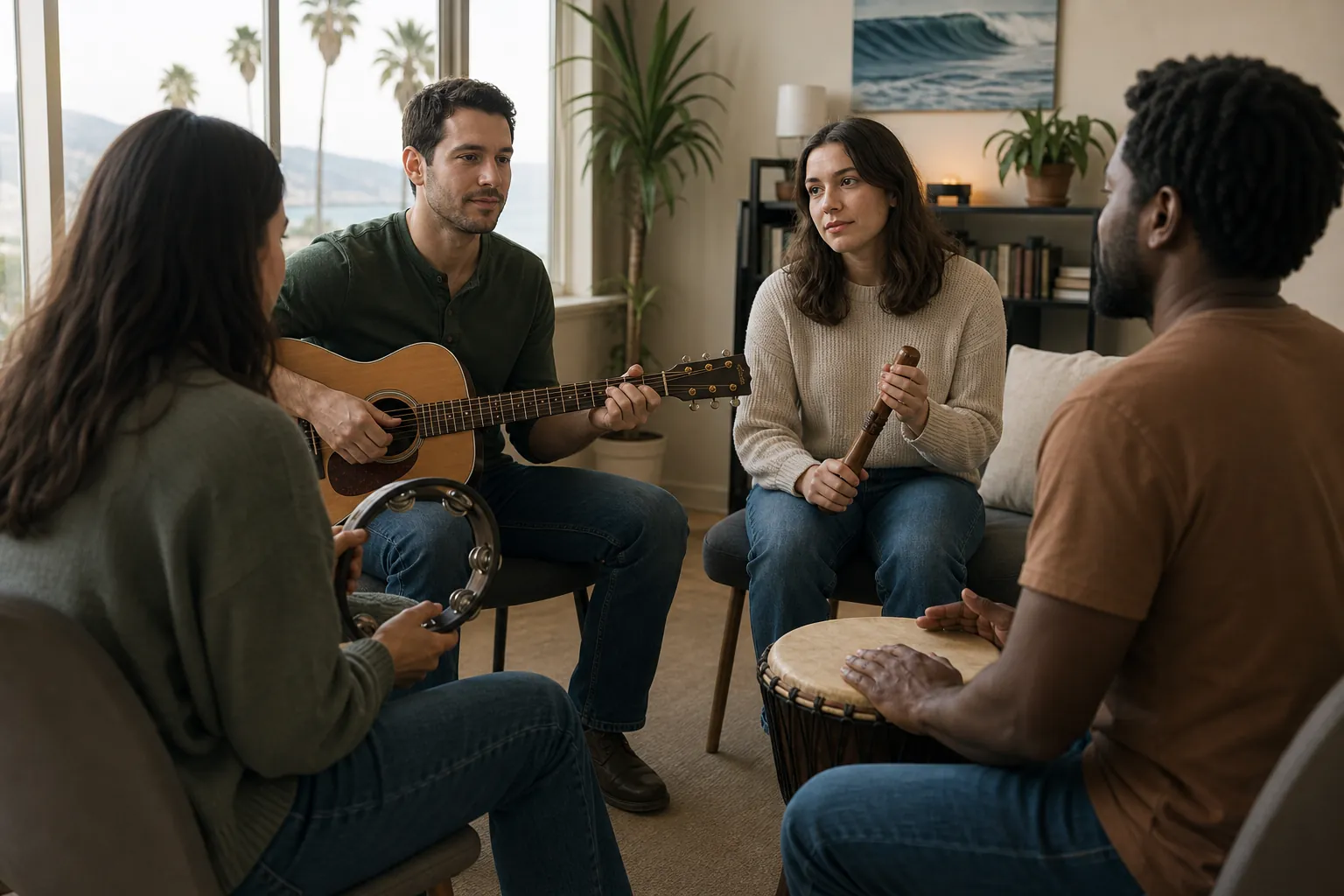
Recovery from substance use is not only about stopping alcohol or drugs. It also involves learning how to manage emotions, reconnect with others, and build a life that feels meaningful. Music can support that process by giving people a structured, creative way to communicate and practice healthy coping.
When comparing programs, ask how assessment findings and individual needs inform the proposed care plan. Ask whether music-based sessions are currently available and whether they are led by a qualified music therapist. When clinically appropriate, creative approaches can complement counseling, education, peer support, and other evidence-based services. Music therapy for addiction recovery is not a replacement for medical or behavioral health care, but it may strengthen a broader treatment plan.
What is music therapy in addiction treatment?
Music therapy is a clinical practice led by a qualified professional who uses music-based activities to address treatment goals. Participants do not need musical experience or talent. The focus is not on performing well. It is on using rhythm, sound, lyrics, and creative participation to support emotional and behavioral health.
A session may involve listening to selected songs, discussing lyrics, writing music, creating simple rhythms, or using guided relaxation with sound. Activities are chosen for a reason and adapted to the participant's needs, comfort level, culture, and stage of recovery.
Some people find it difficult to describe shame, grief, anger, or fear during a traditional conversation. Music can offer another path into those experiences. A song or rhythm may help someone recognize an emotion before they are ready to explain it directly.
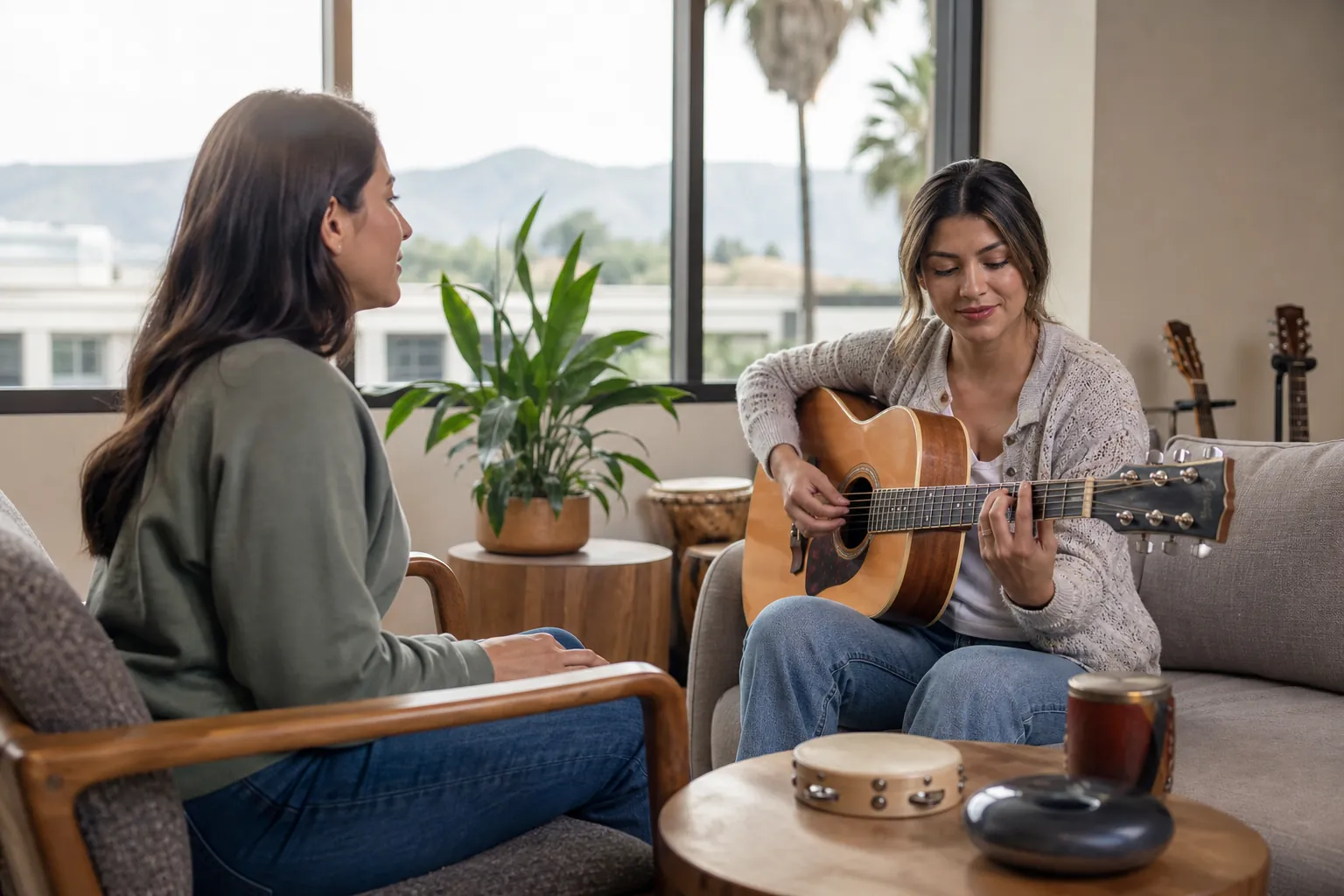
Potential benefits during substance use recovery
Substance use can narrow a person's routines and sources of enjoyment. Recovery often requires rebuilding both. Music-based activities may create healthy moments of engagement while helping participants explore what contributes to cravings, stress, and isolation.
Depending on the person and clinical goals, possible benefits may include:
- Emotional expression: Lyrics, songwriting, and listening exercises can help participants identify and communicate complex feelings.
- Stress management: Carefully selected music and breathing exercises may support relaxation and present-moment awareness.
- Craving awareness: Sessions can help people notice emotional and physical cues that sometimes occur before substance use.
- Healthy enjoyment: Creative activities may reintroduce pleasure, curiosity, and accomplishment without alcohol or drugs.
- Social connection: Group exercises can encourage cooperation, respectful listening, and a sense of shared experience.
- Self-reflection: Discussing songs can reveal personal values, memories, relationship patterns, and recovery goals.
- Confidence: Completing a creative task may help participants practice persistence and recognize personal strengths.
These outcomes vary. Music can also bring up painful memories or strong emotions, so activities should be facilitated thoughtfully within an appropriate treatment setting. A trained provider can monitor responses and adjust the approach when needed.
What a session may look like
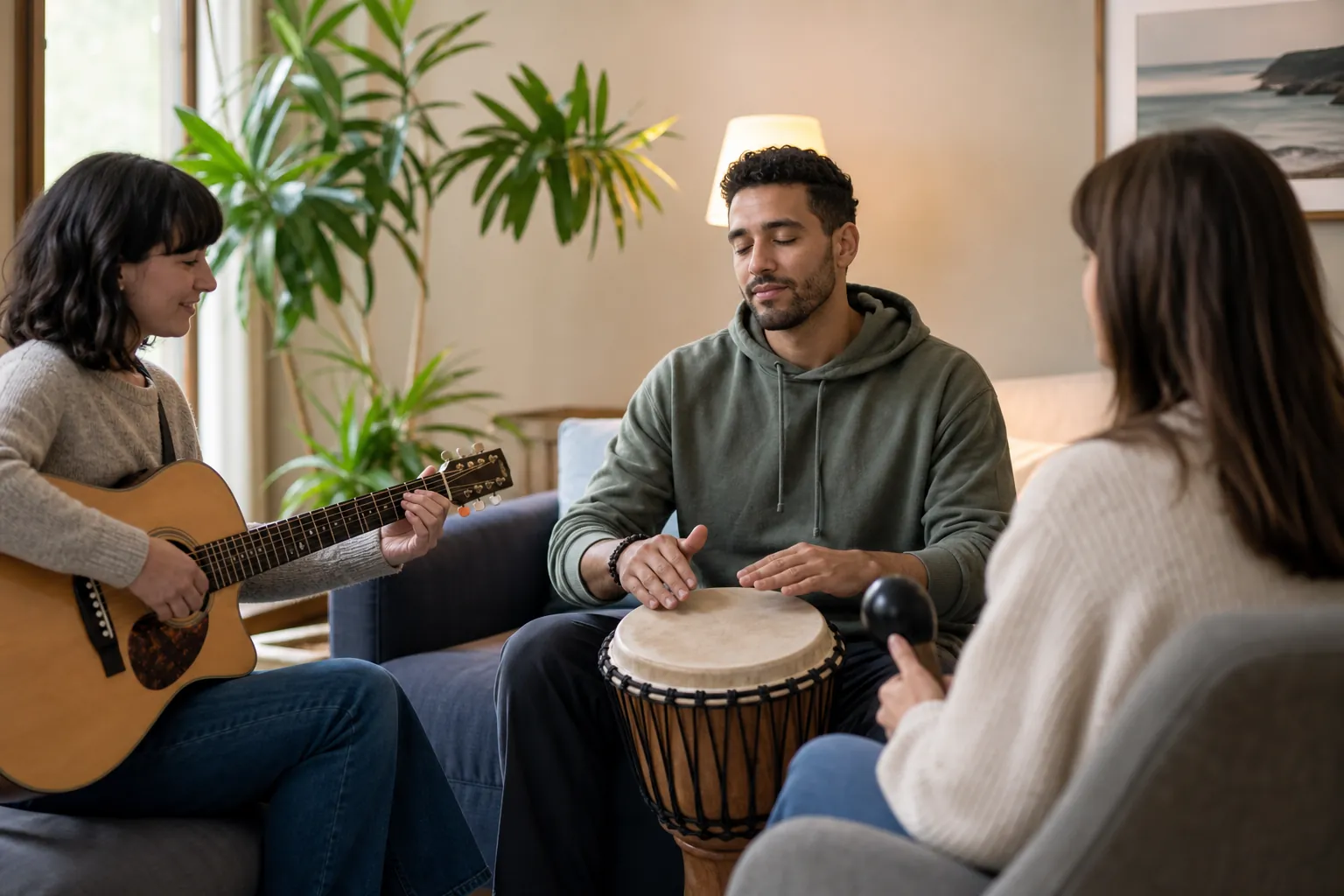
There is no single format for a music therapy session. Individual sessions may provide privacy for exploring grief, trauma-related feelings, identity, or relapse concerns. Group sessions may focus more on communication, trust, shared problem-solving, and community.
Receptive activities involve listening rather than making music. A therapist might invite a participant to notice changes in breathing, describe images prompted by a song, or consider how certain lyrics relate to recovery. This can make abstract experiences easier to discuss.
Active activities may include drumming, improvisation, songwriting, or creating a recovery playlist. Instruments can often be used in simple ways, so participants do not need technical skill. The therapist may connect the activity to practical goals such as tolerating frustration, setting boundaries, or asking for support.
A recovery playlist exercise, for example, should involve more than collecting favorite songs. Participants may choose music that helps them feel grounded, hopeful, energized, or understood. They can also identify songs linked to substance use and decide whether avoiding those tracks would support early recovery.
How music fits into a complete treatment plan
Effective substance use treatment should respond to the whole person. Needs may include withdrawal management, medical care, mental health support, family education, relapse prevention, stable housing, and ongoing community connection. No creative service can address all of these areas by itself.
Music therapy is best viewed as one possible component of coordinated care. It may work alongside individual counseling, group therapy, psychoeducation, medication when prescribed, and planning for continued support. The exact combination depends on a clinical assessment, substance use history, co-occurring conditions, safety concerns, and personal preferences.
Skills explored through music can also transfer to daily life. Someone who practices grounding with rhythm may use a similar technique during a stressful moment. A person who examines lyrics about relationships may become more aware of boundaries. A group songwriting activity may provide practice in accepting feedback and contributing without controlling the outcome.
Who may find this approach helpful?
Music-based support may appeal to people who feel stuck in talk-based settings, enjoy creative activities, or want additional ways to manage emotions. It can also help participants who associate music with identity, family, spirituality, culture, or important life transitions.
However, personal preference matters. Some people may find certain sounds overstimulating, have hearing-related needs, or connect particular songs with trauma or past substance use. Others may simply prefer a different therapeutic approach. Treatment should respect those reactions rather than pressure someone to participate.
Before taking part, it can be useful to ask who facilitates the service, what training they have, how goals are documented, and how the activity connects to the overall care plan. In California, families can also ask a treatment provider how creative services are integrated with clinical programming and discharge planning.
Building a recovery life with meaningful routines
Long-term recovery often becomes more sustainable when people develop routines that offer purpose, connection, and relief from stress. Music may become one part of that life through playing an instrument, attending supportive community events, singing, writing, or listening intentionally.
The goal is not to avoid every difficult feeling. It is to build safer ways to experience and respond to those feelings. When paired with appropriate clinical care, music can help create moments of insight, connection, and hope that support continued change.
If you are exploring substance use treatment in California, Living Longer Recovery can help you learn about available care and next steps. Call (747) 232-9694 for a calm, confidential conversation about your situation and whether our services may be a good fit.
Sources And Important Limits
NCCIH distinguishes professionally delivered music therapy from ordinary music activities. Much of the evidence for music-based interventions is preliminary, and it does not establish lasting recovery from a substance use disorder. Music can also evoke distressing memories or contribute to hearing or physical injury. Ask a qualified clinician about individual needs and limits.
Evaluate Music-Based Support
Learning that a program mentions music is only a starting point. The term can refer to several different experiences, from informal recreational activities to goal-directed sessions facilitated by a qualified music therapist. Before deciding whether an option fits your needs, ask for a clear description of what is offered. A thoughtful conversation can help you understand the role of music, how participation is handled, and how the activity relates to the rest of the proposed care plan.
Begin by asking the provider to define the service in plain language. If it is described as music therapy, find out who leads it and what qualifications that person holds. If it is a music activity rather than music therapy, ask how it is presented to participants and what purpose it serves. This distinction helps set accurate expectations without suggesting that one kind of activity must be right for everyone.
Clarify the purpose and format
Ask what participants generally do during a session. A useful answer should explain whether the format involves listening, lyric discussion, songwriting, rhythm, instruments, relaxation, or another structured activity. You can also ask whether sessions are offered individually, in groups, or in both formats. Understanding the structure may make it easier to anticipate whether the environment will feel comfortable and manageable.
Questions about purpose are equally important. Ask how the facilitator selects an activity and how it connects with a participant's identified goals. The answer should reflect individual needs rather than assume that every person will respond to music in the same way. It is also reasonable to ask whether goals and responses are documented and communicated, when appropriate, to other members of the care team.
- Facilitator: Professional music therapy requires relevant qualifications; ordinary music activities have a different scope.
- Session content: Listening, lyrics, instruments, and other activities can serve different purposes.
- Format: Individual and group settings involve different social demands and levels of privacy.
- Activity selection: Preferences, assessment findings, culture, and sensitivities matter.
- Care plan: A professionally delivered session should connect with identified goals and coordinated care.
- Participation: Actual program policies govern declining, modifying, or stopping an activity.
Discuss choice, comfort, and accessibility
Music is personal. A song that feels calming to one person may be distracting or upsetting to another. Ask how participants can share preferences before a session and whether they can request that certain songs, genres, themes, or sounds be avoided. People should have an opportunity to explain associations with particular music without being required to disclose more personal information than they are ready to discuss.
It can also be useful to ask how the facilitator responds if music brings up an unexpected memory or strong emotion. Look for an answer that recognizes the possibility and explains how the activity can be paused, changed, or ended. Participation should not depend on musical ability, and a person should be able to communicate discomfort without being judged for it.
Accessibility deserves specific attention. Someone with hearing-related needs, sensory sensitivities, mobility limitations, language preferences, or difficulty using an instrument may need an adapted activity. Ask what alternatives are available and how volume, room setup, equipment, and instructions can be adjusted. A clear answer can reveal whether the program treats accessibility as part of planning rather than as an afterthought.
Progress, Reactions, and Coordination
A structured service should involve more than completing an activity. Ask how the facilitator checks in with participants before, during, and after sessions. For example, the facilitator may invite someone to describe what they noticed, identify whether an exercise felt useful, or discuss how the experience connects with a broader goal. The exact process can vary, but the provider should be able to explain it.
You can also ask how the approach changes when an activity is not helpful. A person may prefer listening over performing, private reflection over group discussion, or quiet rhythm work over lyric analysis. Preferences can change over time as well. The ability to adjust the format can help keep the activity responsive to the person rather than centered on a fixed exercise.
When music is one part of coordinated care, ask how relevant observations are shared among appropriate team members. The provider should be able to describe communication practices while respecting privacy. This question is especially useful when several services are involved because it clarifies whether music-based work is connected to the larger plan or treated as an isolated event.
Begin With a Conversation
You can contact a provider without choosing a music activity or preparing a list of preferences. Individual or group formats, sensitivity to sound, and music associated with past substance use may affect how comfortable an activity feels. These details can come up naturally in a conversation, even when it is difficult to know what you need. General information about music therapy does not confirm a program’s current services, staffing, or suitability.
You do not need to make an immediate decision during the first call. Take notes about the facilitator, session format, participation expectations, and relationship to the proposed care plan. If an answer is unclear, ask the provider to explain it differently or provide an example. Plain, specific information is more useful than unfamiliar terminology.
It may help to organize your notes under four simple headings:
- People: The facilitator’s role and other participants shape the session environment.
- Process: Preparation, activities, and follow-up provide context for the session.
- Choice: Declining, adapting, or stopping participation depends on the program’s actual procedures.
- Coordination: Assessment findings and the broader care plan provide the clinical context.
After the conversation, compare what you heard with your needs and preferences. The presence of music alone should not determine whether a program is suitable. Consider the full proposed plan, the clarity of the provider's answers, and whether the approach respects individual choice. If music-based sessions are important to you, confirm that they are currently available rather than assuming they are included because they appear in general educational material.
Keep expectations specific and realistic
A provider should be able to discuss music-based support without promising a particular result. Experiences differ according to personal history, preferences, current needs, and the session context. Some participants may value the chance to reflect through lyrics, while others may prefer rhythm, listening, or no music-based activity at all. A suitable approach leaves room for those differences.
The most useful questions focus on what is actually available, who provides it, how it is adapted, and how it fits into coordinated care. This keeps the decision centered on accurate information rather than assumptions about music or recovery. For questions about available care and next steps, call (747) 232-9694.
Call (747) 232-9694 to talk through next steps.