

Moving into residential treatment involves more than learning a therapy schedule. You also need to understand everyday routines, including how to keep your bedroom comfortable and ready for rest. If you are comparing California programs, asking about residential rehab bedroom cleaning expectations can help you picture daily life and avoid surprises after admission.
Bedroom care should support a safe, manageable living environment, not become a test of character. People entering substance use treatment may arrive tired, anxious, physically uncomfortable, or unfamiliar with shared housing. Clear instructions and reasonable support make a difference.
This guide explains common expectations, questions worth asking, and ways to manage bedroom responsibilities while focusing on recovery. Policies vary by facility. For details about Living Longer Recovery, confirm current requirements directly with the admissions team rather than assuming every practice described here applies.
Why Bedroom Care Matters In Residential Treatment
A bedroom serves several purposes during treatment. It is a place to sleep, change clothes, store personal belongings, and take a quiet break when the schedule allows. Keeping that space reasonably clean can make it easier to use without creating extra stress for you or a roommate.
Basic housekeeping also helps prevent practical problems. Food left in a room can attract pests. Damp towels can create odors. Bags or shoes in walkways can increase the risk of a fall, especially when someone gets up at night.
Small routines may provide opportunities to practice planning and follow-through. Putting laundry away or clearing a bedside surface gives a task a visible beginning and end. However, tidiness is not a measure of recovery progress, motivation, or personal worth.
Clinical care remains the priority. If symptoms, a disability, or a health concern interfere with housekeeping, residents should tell staff. A useful conversation focuses on what is difficult and what support may help, rather than treating every unfinished chore as deliberate noncompliance.

What Residents May Be Expected To Clean
Many residential programs ask residents to handle ordinary upkeep in their own sleeping areas. That usually means caring for personal belongings and leaving the space reasonably orderly. It does not automatically mean residents perform professional sanitation, maintenance, or hazardous cleanup.
Ask for the actual checklist. Words such as “clean,” “organized,” and “inspection-ready” can mean different things to different people. Written examples help you understand whether a task is daily, weekly, or only necessary when something becomes dirty.
- Residents may be asked to straighten their bedding after getting up, unless staff provide different instructions.
- Clothing may need to stay in assigned drawers, closets, or laundry containers rather than on the floor.
- Trash may need to go into designated bins and be removed according to the house schedule.
- Personal surfaces may need to remain clear enough for routine cleaning and safe access.
- Used towels and dirty linens may need to be placed in an approved collection area.
- Walkways, doorways, and access to windows may need to remain free of belongings.
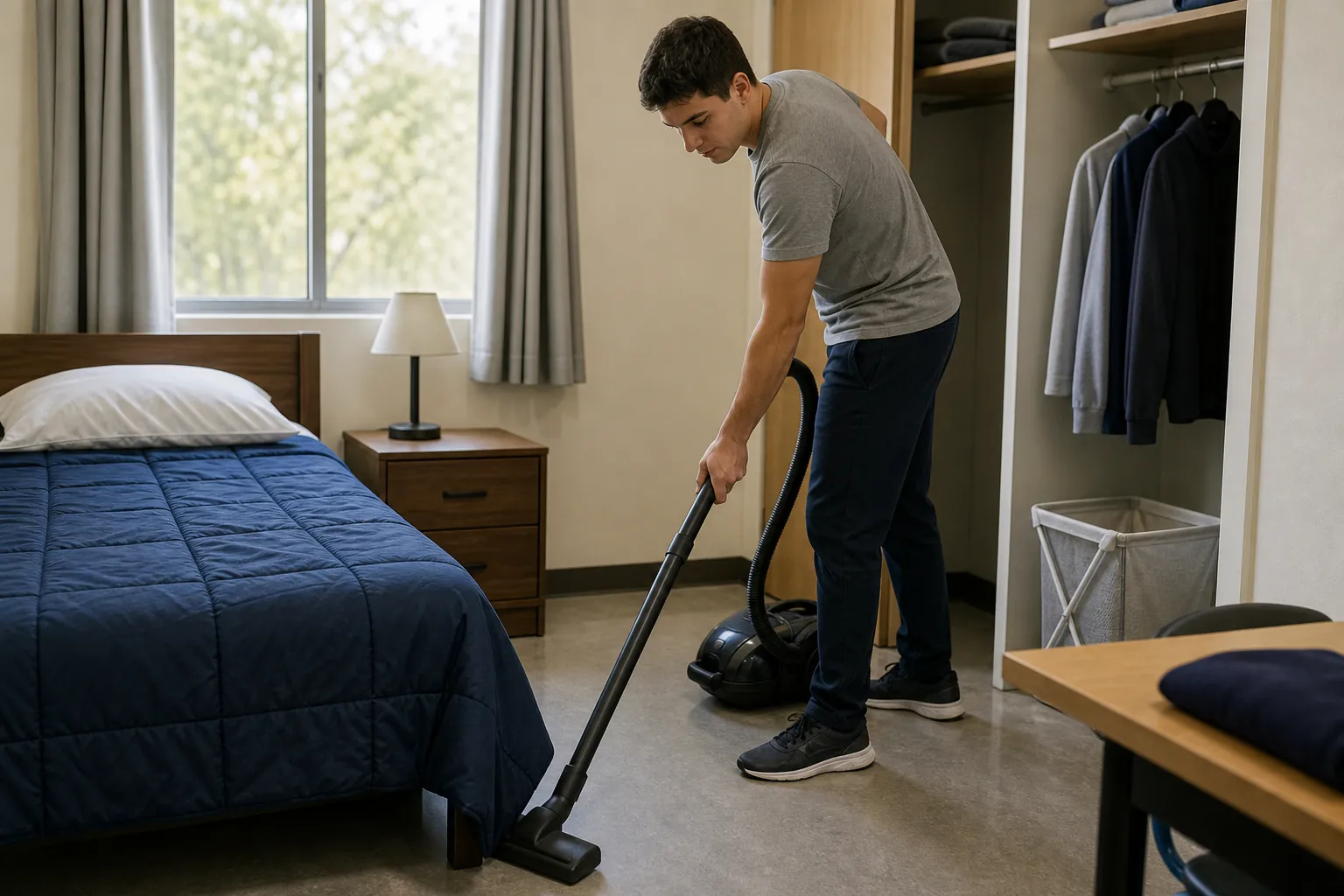
Clarify whether residents wipe surfaces, sweep, vacuum, or do none of those tasks. Also ask whether staff supply equipment and demonstrate its use. You should not need to guess which cleaner belongs on a surface or whether a particular product is permitted.
Where Resident Tasks End And Staff Responsibilities Begin
Personal tidying is different from deep cleaning. A facility may assign routine room care to residents while using housekeeping staff or other arrangements for bathrooms, floor care, and scheduled sanitation. The division of responsibility varies, so ask who does what before admission.
Building problems should be reported, not handled as ordinary bedroom chores. Examples include a leaking ceiling, broken furniture, persistent moisture, a damaged outlet, or signs of pests. Residents should not repair electrical equipment or mix chemicals to solve a cleaning problem.
Blood, vomit, needles, and other potentially hazardous materials also require a different response. Notify staff promptly and follow their directions. Do not assume you are expected to clean such materials simply because they are in your bedroom.
If a roommate becomes ill or a room needs special cleaning, ask how staff protect residents and arrange access. You can request an explanation of what will happen without needing private information about another person's health.
What A Manageable Daily Routine Can Look Like
A short reset is often easier than waiting until a room feels overwhelming. The goal is not to maintain a showroom. It is to keep the room usable and prevent small tasks from growing into larger ones.
In the morning, straighten bedding if required, put sleepwear away, and place dirty clothing in a hamper. Before leaving for scheduled programming, check that shoes and bags are out of the walking path. These actions can usually be grouped into one brief routine.
Later in the day, deal with new clutter rather than restarting the whole room. Put approved personal items back in their assigned places, check whether the trash needs attention, and follow the facility's rules about cups or food containers.
A weekly reset might involve changing linens, organizing a drawer, or completing assigned floor care. Confirm the timing with staff so housekeeping does not conflict with therapy, medication appointments, meals, or needed rest.
- Choose one task to start with when the room feels overwhelming, such as clearing the floor.
- Keep approved supplies in their designated location so they are easy to find.
- Ask staff to explain a task if the instructions are unclear rather than guessing.
- Tell staff early when you cannot complete an assigned task within the expected time.
Laundry, Bedding, And Personal Clothing
Laundry arrangements are worth discussing before packing. Some facilities offer resident access to washers and dryers, while others use scheduled laundry services or staff-assisted systems. Machine availability, detergent rules, and linen-change schedules may affect how much clothing you need.
Ask whether the program supplies sheets, blankets, pillows, and towels. If you want to bring your own bedding, get approval first. Facilities may limit items because of storage space, laundering requirements, or safety policies.
Find out how clean and dirty items are separated. Keeping damp towels away from clean clothes and allowing permitted items to dry properly can reduce odors. Avoid leaving wet laundry in a machine or sealed bag longer than necessary.
If detergent fragrances irritate your skin or trigger headaches, raise the issue before arrival when possible. Staff can explain available options and whether you may bring an approved alternative. Do not assume outside laundry products are allowed.
People who need help lifting a laundry basket, reaching machines, or remembering a schedule should ask how assistance is arranged. Practical support can make the routine more accessible without requiring another resident to take responsibility for it.
Sharing A Bedroom Without Turning Chores Into Conflict
In a shared room, different habits can become noticeable quickly. One person may prefer an almost empty bedside table, while another keeps several approved items within reach. Facility standards should guide the arrangement, not whichever roommate feels most strongly.
Start by understanding which areas are personal and which are shared. Ask how closet space, drawers, shelves, and floor space are divided. Keep belongings within your assigned area and avoid moving someone else's property without permission.
Discuss practical preferences calmly. A specific request such as “Could we keep this path clear at night?” is more useful than labeling a roommate messy. Focus on the effect of a behavior rather than making assumptions about the person's motivation.
If a disagreement continues, ask staff to help. You do not need to monitor another resident's chores or become responsible for enforcing the rules. Staff involvement is especially important when clutter affects safe access, sanitation, or your ability to use the room.
Respect privacy while cleaning. Do not open a roommate's drawers, read papers, handle medication, or photograph their belongings. A shared bedroom does not make personal possessions communal.
Room Checks, Privacy, And Clear Communication
Residential programs may conduct room checks for cleanliness, maintenance needs, or compliance with safety rules. A housekeeping check and a search for prohibited items are not necessarily the same process. Ask the program to explain both, including how residents receive notice when applicable.
Useful questions include who may enter the room, whether residents are normally present, and how concerns are documented. Also ask what happens when an item needs to be moved or a cleaning task needs to be repeated.
It is reasonable to want an explanation of policies that affect your living space. At the same time, do not assume a private bedroom means staff never enter it. Understanding the rules beforehand helps you make an informed decision about the setting.
If room entry is especially stressful because of past experiences, tell the treatment team. You can ask whether staff can explain the process, announce their presence when appropriate, or discuss other supportive measures within the facility's policies.
For any concern about missing property or how a check was handled, use the program's reporting process. Describe what happened, when it happened, and what clarification you need. Avoid confronting roommates based only on suspicion.
When Health Or Disability Affects Cleaning
Early recovery can involve changes in energy, sleep, concentration, and physical comfort. Other health conditions may make bending, carrying, standing, or using certain products difficult. These concerns deserve attention rather than silence.
Tell staff which part of a task is hard. “I feel dizzy when I bend down” gives more useful information than “I cannot clean.” Staff can determine whether clinical assessment, practical assistance, or a change in the task is appropriate.
Possible supports may include clearer instructions, a smaller sequence of tasks, a different time of day, or assistance with physically demanding work. Availability depends on the facility and the individual's needs. Ask how requests are reviewed instead of assuming a particular adjustment is guaranteed.
Do not push through severe symptoms to finish a chore. If you feel acutely unwell, notify staff promptly and follow clinical guidance. Household responsibilities should not replace evaluation of a medical concern.
Family members can help by sharing relevant accessibility needs with permission and asking how the program handles them. They should avoid promising that chores will be waived or that a roommate will provide help.
Cleaning Supplies, Food, And Items To Ask About
Before buying supplies, request the packing list. Residential treatment settings may restrict chemical cleaners, aerosols, glass containers, scented products, or other items. Restrictions differ, and a product that is common at home may not be approved.
Use only authorized products as directed. Never mix cleaners, transfer them into drink containers, or borrow an unidentified substance from another resident. Ask staff about storage and what to do if a product causes irritation.
Food rules also affect bedroom cleaning. Some programs require all meals and snacks to stay in designated areas. Others permit limited items under specific conditions. Confirm the policy instead of relying on what another resident says.
Ask about reusable bottles, cups, and dishes, including where they should be washed. A bedroom sink, if present, may not be the designated place for every cleaning task.
Pack belongings that are easy to organize and care for. Extra decorations, large luggage, or many pairs of shoes can make a limited room harder to maintain. Bringing less can be helpful, but your choices should still follow the program's packing guidance.
Questions To Ask A California Rehab Before Admission
Cleaning practices can differ between California residential programs, even when their treatment descriptions sound similar. An admissions conversation is a good time to clarify the daily living details that matter to you.
- Ask which bedroom tasks residents complete and how frequently each task is expected.
- Ask whether bedrooms are shared and how storage space is assigned.
- Ask who provides routine housekeeping, deep cleaning, and bathroom sanitation.
- Ask how laundry works and whether detergent, bedding, and towels are supplied.
- Ask what cleaning products and personal household items are prohibited.
- Ask how room checks work and where you can review the written policy.
- Ask how health limitations or accessibility needs are discussed and addressed.
- Ask whom you should contact about a spill, maintenance issue, or roommate disagreement.
Write down the answers or request written materials. If an answer is vague, ask for a concrete example of a typical day. Knowing the actual routine is more useful than hearing that residents simply “keep things clean.”
Preparing For A Comfortable Start At Living Longer Recovery
You do not need perfect housekeeping habits before seeking treatment. A more useful starting point is a willingness to learn the routine, communicate difficulties, and respect shared space. Bedroom care should remain one manageable part of residential life.
Before arrival, review the current packing list and identify any concerns about laundry, cleaning products, privacy, or physical limitations. Bring those questions to admissions so you can understand expectations before settling in.
To discuss residential treatment in California and confirm Living Longer Recovery's current bedroom policies, call (747) 232-9694. A straightforward conversation about daily responsibilities can help you prepare for treatment with fewer unanswered questions.
Call (747) 232-9694 to talk through next steps.