Understanding smoking policies at rehab in California

Preparing to enter substance use treatment can bring up practical questions that feel small but matter to daily comfort. If you smoke cigarettes, vape, or use another nicotine product, you may wonder whether you can continue during residential care. The answer depends on the facility, its clinical approach, local rules, and the needs of the people it serves.
A smoking policy at rehab usually explains where nicotine products may be used, which items are prohibited, and whether staff offer support for quitting. Understanding these expectations before admission can reduce stress and help you pack appropriately. Living Longer Recovery encourages prospective clients and families to ask direct questions so there are fewer surprises on arrival.
Why rehab centers have different smoking policies
California treatment programs do not all manage tobacco and nicotine in the same way. Some campuses are completely tobacco-free, while others permit cigarette smoking in designated outdoor areas. A program may allow cigarettes but prohibit vaping devices because those devices can be difficult to monitor or may pose safety concerns.
Each center considers its physical setting, licensing requirements, fire prevention procedures, insurance policies, and treatment philosophy. Programs also need to protect nonsmoking clients and employees from secondhand smoke. A facility located near wildfire-prone land may enforce especially strict rules about flames, lighters, and outdoor smoking.
Rules can also vary by level of care. A detox unit may have closer supervision and scheduled breaks, while an outpatient program may only prohibit tobacco use inside the building and near entrances. Never assume that a policy from one program will apply to another.

What a typical policy may cover
When smoking is permitted, the program will usually establish clear boundaries. Clients may be limited to specific outdoor locations and scheduled times. Staff may store cigarettes and distribute them during approved breaks. Lighters, matches, loose tobacco, and refill liquids may be restricted or kept by staff.
Before admission, ask for the current policy in writing. Important questions include:
- Are cigarettes allowed? Confirm whether the campus permits smoking at all and whether approved brands must arrive in sealed packaging.
- Are vapes or e-cigarettes permitted? Many facilities treat electronic devices differently from traditional cigarettes.
- Who holds nicotine products? Some programs require staff to store and monitor all tobacco items.
- When can clients smoke? Breaks may follow a set schedule and may not be available during groups, therapy, or medical appointments.
- Where is smoking allowed? Use may be limited to one supervised outdoor area away from doors and windows.
- Can family members bring supplies? Deliveries may require prior approval and inspection.
- Are nicotine replacement options available? Ask whether patches, gum, or lozenges can be provided or brought from home.
- What happens if rules are broken? Understanding consequences supports informed consent and safer participation.
Policies can change because of weather, local restrictions, or safety concerns. Even when smoking is normally allowed, a center may temporarily suspend outdoor use during poor air quality, high fire danger, or an emergency.
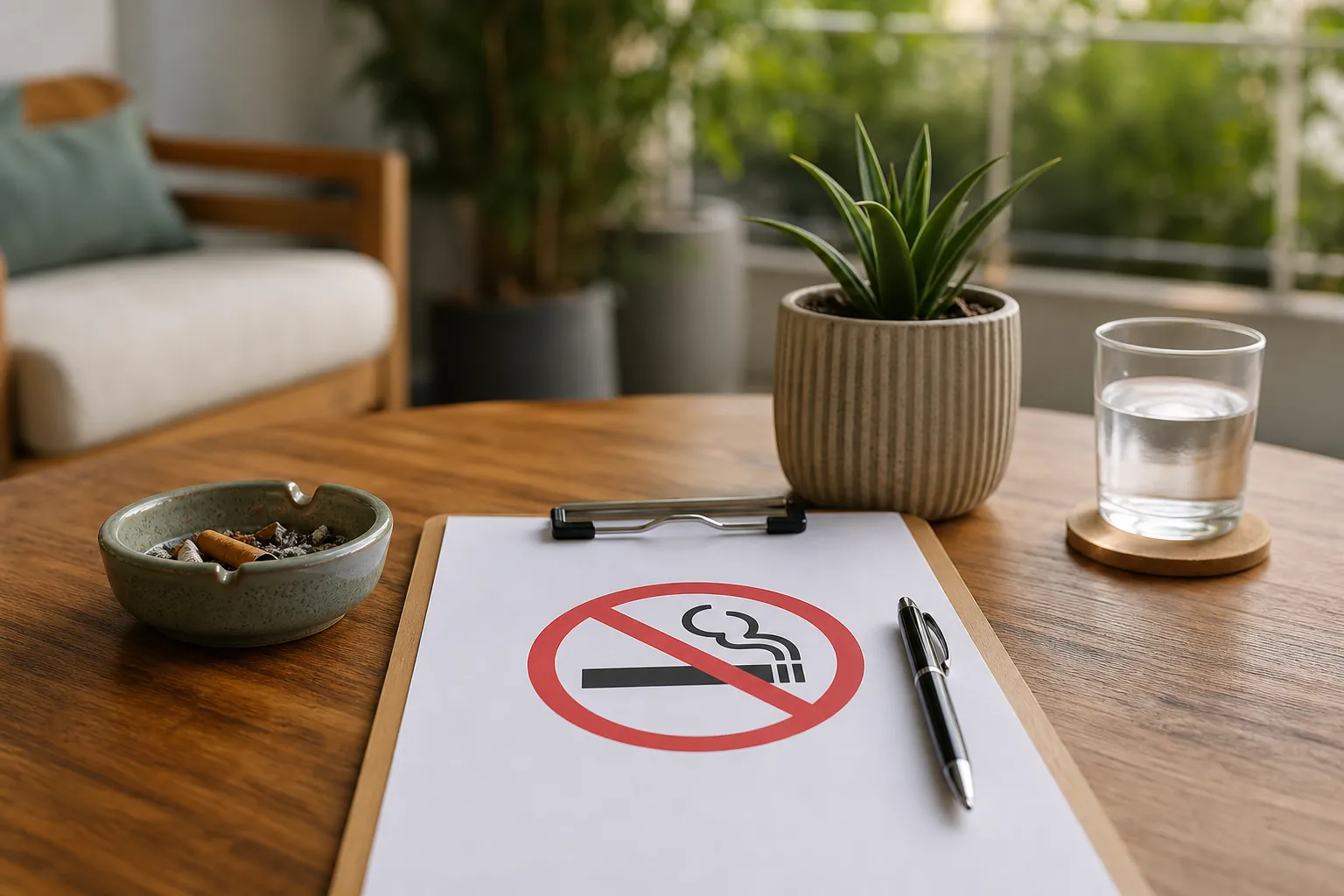
Cigarettes, vaping, and other nicotine products
Clients sometimes expect vaping to be treated as a safer or more acceptable alternative to smoking. In treatment settings, however, vape pens can create unique concerns. Devices may be altered, refill containers can be hard to identify, and charging batteries may present fire risks. For these reasons, a rehab may ban vapes even if it permits factory-sealed cigarettes.
Chewing tobacco, nicotine pouches, cigars, and pipes may also have separate rules. A center might prohibit smokeless products due to sanitation concerns or because discreet use makes supervision difficult. Products containing cannabis are not equivalent to tobacco products and should never be brought to treatment without explicit authorization. California's cannabis laws do not require a private treatment program to permit possession or use on its property.
Clients should disclose all nicotine use during the admissions assessment. Accurate information helps clinical staff anticipate withdrawal symptoms, medication interactions, and support needs. It also prevents accidental violations caused by packing an item that is not allowed.
Managing nicotine withdrawal during treatment
Nicotine withdrawal can involve irritability, anxiety, restlessness, headaches, sleep changes, difficulty concentrating, and strong cravings. Some of these symptoms can overlap with early recovery from alcohol or other drugs. Clinical supervision helps the team distinguish likely causes and respond appropriately.
A smoke-free facility may offer nicotine replacement therapy when clinically appropriate. Patches provide a steady amount of nicotine, while gum or lozenges may help with breakthrough cravings. Availability, cost, and prescribing procedures vary, so discuss options before arrival. People with certain medical conditions should consult qualified healthcare professionals rather than starting products on their own.
Behavioral strategies may also help. Clients can practice paced breathing, take brief walks, drink water, use approved sugar-free candy, or discuss cravings with staff. Structured groups and therapy sessions can identify triggers such as stress, boredom, meals, or social routines. The goal is not to shame anyone for nicotine use. It is to promote safety and support decisions consistent with the treatment plan.
Should you quit smoking while in rehab?
Some people want to address nicotine dependence at the same time as other substance use. Others worry that quitting everything at once will feel overwhelming. There is no universal answer, and treatment decisions should reflect medical needs, motivation, and the recommendations of the clinical team.
A rehab program may encourage tobacco cessation because smoking can become closely linked with cravings, peer interactions, and stress responses. Learning healthier coping skills may support broader recovery. At the same time, a person should be honest about readiness instead of hiding use or attempting to bypass the rules.
If quitting is a goal, ask whether the program includes counseling, educational groups, medication support, or relapse-prevention planning for nicotine. If quitting is not the immediate goal, following designated-area and scheduling requirements still protects the community and keeps treatment on track.
How to prepare before admission
Contact the admissions team before packing. Request a list of permitted and prohibited items, and mention cigarettes, disposable vapes, refillable devices, nicotine pouches, gum, patches, lighters, and chargers individually. Specific questions are more reliable than asking only whether smoking is allowed.
Do not conceal nicotine products in luggage. Admission searches are common safety procedures, and undeclared items can undermine trust at the beginning of care. Bring only approved quantities in accepted packaging. If medication or nicotine replacement has been recommended, ask whether it needs a prescription, original label, or prior clinical review.
Family members should understand the rules too. Well-intended visitors can cause problems by bringing prohibited supplies or using tobacco outside approved areas. Clear expectations help everyone support recovery without unnecessary conflict.
Ask Living Longer Recovery before you arrive
The right treatment environment should offer clear information, respectful communication, and practical support. Smoking rules are only one part of choosing care, but knowing them ahead of time can make the transition into treatment easier.
To ask about the current smoking policy at rehab, nicotine support, admissions procedures, or substance use treatment options in California, call Living Longer Recovery at (747) 232-9694. Our team can explain what to expect and help you consider appropriate next steps without pressure.
Call (747) 232-9694 to talk through next steps.